Skip to Sidebar Skip to Content
Entralon Hub | Real Estate Think Tank & Global Community Entralon Hub | Real Estate Think Tank & Global Community
Anonymous

  • Sign in
  • Home
  • The Playbook
  • Market Watch
  • Field Notes
  • Authors & Publishers
  • About Us
  • Browse properties
  • Entralon Academy
  • Entralon Club
Tags
  • Beginner
  • Finance
  • Blueprint
  • Market Pulse
  • Instagram
  • Youtube
  • Whatsapp
  • X
  • TikTok
  • Linkedin
© 2026  Entralon Group

Why First-Time Buyers Can’t Enter the Market Anymore

  • Dr Farid Bagheri by Dr Farid Bagheri
    Dr Farid Bagheri Dr Farid Bagheri
    Dr Farid Zadeh Bagheri is an entrepreneur and strategist focused on redefining access in real estate through structural insight, technology, and global investment experience.
    • Website
  • •
  • January 01, 2026
  • •
  • 4 min read
  • Share on X
  • Share on Facebook
  • Share on LinkedIn
  • Share on Pinterest
  • Email
Why First-Time Buyers Can’t Enter the Market Anymore
Editor’s Note:

This article is part of Entralon Hub’s Leadership View series, where senior contributors examine the structural forces reshaping access, participation, and long-term stability in global housing markets.

In this feature, Dr Farid Zadeh Bagheri, CEO & Founder at Open Estate, examines why first-time buyers are no longer able to enter the housing market, not only because homes have become genuinely more expensive, but because rising prices and tightening liquidity now reinforce each other, shutting down entry.

Homes Are Genuinely More Expensive

Why price pressure is real, not perceived

The first problem facing first-time buyers is straightforward: homes genuinely cost more than they used to.

Across major cities, housing prices have risen far faster than wages. In markets such as London, average home prices now sit around £500,000, meaning a standard 10–20% deposit requires £50,000–£100,000 upfront, before any mortgage is even considered.

For a household able to save £4,000–£6,000 per year; already an ambitious assumption after rent and living costs, accumulating that deposit typically takes 10 to 15 years of uninterrupted saving.

This is not time to buy the home, but simply time to qualify to enter.

A generation ago, deposits were measured in a few years of saving. Today, they absorb a large portion of a working decade, often extending well into the years when homeownership once began naturally.

During that time, prices continue to move. Even disciplined saving struggles to close the gap, as deposit targets rise faster than accumulated capital.

This is why price pressure is not a perception issue. It is a time-to-entry problem.

And it forms the first structural barrier that delays entry long enough for many first-time buyers to never meaningfully reach it.

💡
Investor Lens:

When deposits require a decade or more to accumulate, rising prices transform entry from difficult into structurally inaccessible.

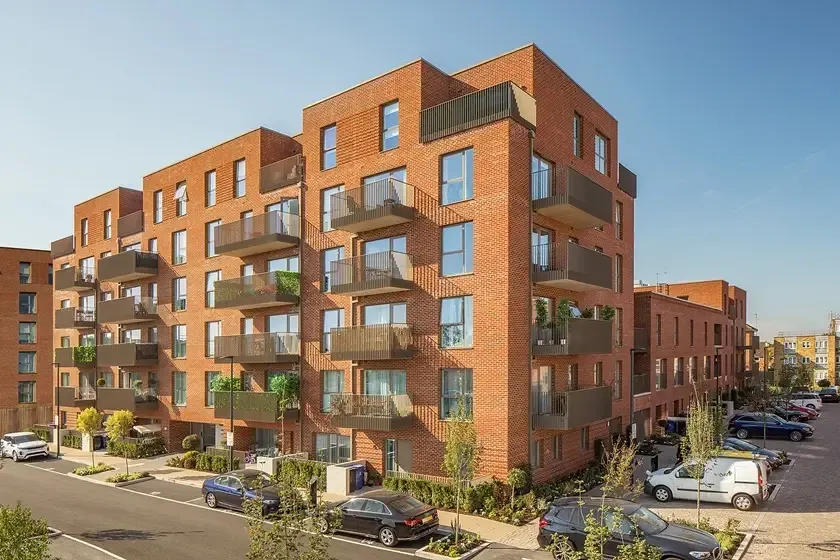
Eastman Village - London

One of the most affordable projects - Perfect for First-Time Buyers

Higher Prices Trigger Tighter Access

How cost inflation turns into exclusion

As prices rise, the capital required to enter the market rises with them. Larger deposits, stricter affordability tests, and higher debt-service ratios follow naturally.

In response, lenders tighten criteria. Borrowing capacity shrinks faster than prices fall, if prices fall at all.

At this point, the problem stops being price alone and becomes liquidity: who can still mobilise capital under tougher conditions.

Those without existing assets, family support, or prior equity find themselves unable to qualify, regardless of income stability or effort.

💡
Investor Lens:

When prices rise faster than access expands, liquidity becomes the binding constraint.

Colindale Gardens - London

lower starting price - Perfect for families and internationals

Why Prices Stay High While Buyers Disappear

The liquidity split inside the market

Crucially, higher prices do not affect all buyers equally.

Cash buyers, equity-rich households, and liquidity-secure investors remain active even as borrowing becomes harder. Their continued participation stabilises prices and transaction volumes.

First-time buyers, by contrast, rely almost entirely on financing. As liquidity tightens, they disappear from the market — quietly, without a crash.

The result is a split market:

  • Prices remain elevated
  • Activity continues
  • Entry collapses
💡
Investor Lens:

Price stability can coexist with collapsing access when liquidity is unevenly distributed.

Insights from Those Who Shape the Market

Subscribe to get first access to exclusive interviews and perspectives from top industry voices.

Email sent! Check your inbox to complete your signup.

No spam. Unsubscribe anytime.

Ownership No Longer Functions as a Pathway

Why effort no longer closes the gap

In earlier systems, rising prices were offset by time. Buyers entered earlier, leveraged moderately, and allowed equity to compound.

That mechanism no longer works.

When prices rise faster than savings and liquidity tightens simultaneously, time stops helping. Saving longer does not close the gap; it often widens it.

Ownership shifts from a pathway you build toward to proof that you already qualify.

💡
Investor Lens:

When time no longer offsets price growth, ownership stops rewarding effort.
Free membership in the global think tank shaping the future of real estate.

The Structural Impact on First-Time Buyers

From delayed entry to denied entry

This post is for subscribers only

Become a member now and have access to all posts, enjoy exclusive content, and stay updated with constant updates.

Become a member

Already have an account? Sign in

Dr Farid Bagheri Dr Farid Bagheri
Dr Farid Zadeh Bagheri is an entrepreneur and strategist focused on redefining access in real estate through structural insight, technology, and global investment experience.
  • Website
Dr Farid Bagheri Dr Farid Bagheri
Dr Farid Zadeh Bagheri is an entrepreneur and strategist focused on redefining access in real estate through structural insight, technology, and global investment experience.
  • Website
On this page
Unlock full content
Please check your inbox and click the confirmation link.

Read Next

Access Is Not Enough: Tokenisation in a Maturing Real Estate Market 4 min read

Access Is Not Enough: Tokenisation in a Maturing Real Estate Market

Michal Kubicki Michal Kubicki
Chair at Real Estate Commitee at Polish Chamber of Commerce/Council Member at Polish-Spanish Chamber of Commerce/CEO Omega Asset management/CMP Center Management Polska
    Apr 19, 2026
    How Architectural Practices Must Re-Tool for Long-Term Performance 2 min read

    How Architectural Practices Must Re-Tool for Long-Term Performance

    Iwein Meyskens Iwein Meyskens
    Iwein Meyskens Iwein Meyskens
    Civil engineer-architect, co-founder and managing director of Archipelago. Specialised in research-driven architecture for living, care, work and learning, with a focus on user experience, sustainability and circular building economics.
      Apr 18, 2026
      From Regional Market to Global Scale: How Poland’s Top-20 Economy Status Repositions Real Estate Capital 5 min read

      From Regional Market to Global Scale: How Poland’s Top-20 Economy Status Repositions Real Estate Capital

      Michal Kubicki Michal Kubicki
      Michal Kubicki Michal Kubicki
      Chair at Real Estate Commitee at Polish Chamber of Commerce/Council Member at Polish-Spanish Chamber of Commerce/CEO Omega Asset management/CMP Center Management Polska
        Apr 17, 2026
        Architecture as Capital Signal: How Design Is Reshaping Foreign Investment in Albania 6 min read

        Architecture as Capital Signal: How Design Is Reshaping Foreign Investment in Albania

        Adelajda Roka Adelajda Roka
        Adelajda Roka Adelajda Roka
        Adelajda Roka is an experienced legal consultant and executive leader with a strong background in national and international project management. Currently serving as the General Director of the Agency of Territorial Development.
          Apr 16, 2026
          How Next-Generation Data Rooms Are Reshaping Real Estate Decision-Making 4 min read

          How Next-Generation Data Rooms Are Reshaping Real Estate Decision-Making

          Holger Weber Holger Weber
          Holger Weber Holger Weber
          Study Maths, Physics, Information Science. Founder of x.project AG, which is an engineering and software office in Frankfurt. Highly interested in technical aspects of real estate including sustainability and resilience.
            Apr 15, 2026
            The new investor reality: pricing environmental risk before market volatility 4 min read

            The new investor reality: pricing environmental risk before market volatility

            Amer Khansaheb Amer Khansaheb
            Amer Khansaheb Amer Khansaheb
            CEO & Board Member of Union Properties
              Apr 14, 2026
              Why Germany’s Residential Imbalance Still Attracts Capital 5 min read

              Why Germany’s Residential Imbalance Still Attracts Capital

              Markus Lambrecht Markus Lambrecht
              Markus Lambrecht Markus Lambrecht
                Mar 16, 2026
                ESG and the Shift Toward Disciplined Development: Lessons from Poland’s Commercial Real Estate Market 4 min read

                ESG and the Shift Toward Disciplined Development: Lessons from Poland’s Commercial Real Estate Market

                Wirginia Leszczyńska Wirginia Leszczyńska
                Wirginia Leszczyńska Wirginia Leszczyńska
                Wirginia Leszczyńska is COO & CSO at DL Invest Group, driving 17+ years of strategic growth, digital transformation, and ESG-led investment to maximize portfolio value in Poland’s property market.
                  Mar 13, 2026
                  The Insider Advantage: How to Spot Hidden Market Signals Before You Buy Your First Home 6 min read

                  The Insider Advantage: How to Spot Hidden Market Signals Before You Buy Your First Home

                  Pablo Kurlat Pablo Kurlat
                  Pablo Kurlat Pablo Kurlat
                  Professor of Economics, University of Southern California
                    Johannes Stroebel
                    Johannes Stroebel Johannes Stroebel
                    David S. Loeb Professor of FinanceDirector, Climate Finance InitiativeNBER Research AssociateCEPR Research AffiliateCESifo Research Fellow
                      Johannes Stroebel Johannes Stroebel
                      Mar 13, 2026
                      Winning the Long Game: A Roadmap for the Modern Real Estate Professional 6 min read

                      Winning the Long Game: A Roadmap for the Modern Real Estate Professional

                      Johannes Brinkmann Johannes Brinkmann
                      Johannes Brinkmann Johannes Brinkmann
                      Bi Norwegian Business School, Department of Strategy and Logistics, Faculty Member
                        Mar 12, 2026

                        Subscribe to Newsletter

                        Join me on this exciting journey as we explore the boundless world of web design together.

                        Please check your inbox and click the confirmation link.
                        Entralon Hub | Real Estate Think Tank & Global Community Entralon Hub | Real Estate Think Tank & Global Community
                        • Home
                        • The Playbook
                        • Market Watch
                        • Field Notes
                        • Authors & Publishers
                        • About Us
                        • Browse properties
                        • Entralon Academy
                        • Entralon Club
                        Tags
                        • Beginner
                        • Finance
                        • Blueprint
                        • Market Pulse
                        • Instagram
                        • Youtube
                        • Whatsapp
                        • X
                        • TikTok
                        • Linkedin
                        © 2026  Entralon Group